Showing posts with label limited fork theory. Show all posts
Showing posts with label limited fork theory. Show all posts
Tuesday, February 5, 2013
Varieties
So much variety in nature --what are preferences? --how do you know that what you consider "preferences" "really" are "preferences"? --what does it seem that nature is "against"? --how can "nature's" attitudes (if any) be assessed?


Wednesday, January 23, 2013
Highly recommend "Colors of Nature" --for making books, or for making something out of whatever you have for life! http://www.amazon.com/Colors-Nature-Culture-Identity-Natural/dp/1571313192
--you won't regret this! --this book is available physically or electronically, as an ibook or Kindle!


 --and I hope you like my contribution: "Tarsenna's Defiance Garden in which I love to Spit"
these pictures (courtesy Google earth) reveal this garden as it appears "now" -or as it appeared earlier this morning when I used Google Earth to peek.
--you won't regret this! --this book is available physically or electronically, as an ibook or Kindle!


these pictures (courtesy Google earth) reveal this garden as it appears "now" -or as it appeared earlier this morning when I used Google Earth to peek.
Wednesday, October 10, 2012
Please check out this link to Lichtenberg Figures:
and watch the video in which forkergirl discusses their significance in her work,
a YouTube video.
In the following image, you see journeys of electrons in plexiglas --a fractal similarity to forests is unmistakable --but this one can be held in a hand! --Please notice how these tines, of so many forks appear to be reaching out to each other --in attempts to connect --temporarily! Electron bridges! Electron connections! --on every scale, some form of this happens! in every location! for EVERY duration! --so important that we attempt to connect! What would we be without attempts! --fine if we fail, as long as we've tried! --and the figure itself documents attempt!
 |
| This image of captured lightning comes from the website this link goes to. |
Tuesday, April 19, 2011
FUTURE BOOKS (memory might serve us well there)
There are already colleges, such as Chicago State University, planning to be conventional-book free, opting for multi-functional iPad e-text delivery. Some may have converted already, certainly class-by-class. I have been drawing materials for my classes from materials placed online for free and therefore also, usually, unlimited access. This I do as a form of gratitude. The Creative Commons share-alike license is of particular interest (and eligibility for unsolicited praise) for its acknowledgment of both the complexity of authorship and the challenges of trying to make something without any influence (interaction, collaboration) from any sources outside the maker. To make without any influence would be such a simple and probably thin making, stripped of everything, even computers, pens, pencils, ink unless the maker also made these without any contribution from any source other than the maker who, arguably, could not even make anything involving the self the maker may have thought was claimable, but the maker was conceived through interaction, is an outcome of influence, with or without romance.
Though I have a substantial photocopying and printing allowance, I've printed nothing at the university for over five years. We are a paper-free class in our sharing of information strictly digitally, and in public blogs —in support of the Limited Fork Theory tenet of a fundamental collaborative nature of all things (where all refers to what manages, in some form, on some scale to adhere to a tine, not to what falls through tines: an all of slippage, for instance), and in support of my belief that work done by students should not be confined to professor-interaction (where it would receive primarily professor-influence in that impoverished interaction, that in some cases, such as those in which a professor might have expectation [sometimes even assigned expectation —yikes!] of student-parroting of professorial views —sort of intellectually incestuous). While slightly better than professor-only privileged student work interaction, I find even class-only interaction still too limited (especially in certain configurations of peer critique especially within certain workshop configurations); rather this work, as often as possible, should be placed boldly (—class, does not your content represent what you believed at the time of the content's generation? does not your content reveal some accuracy of [some sincerity of] thought at the time of the content's generation?) in public where we practice some minimal responsibility of social and political and intellectual responsibility by not being afraid to claim our (examined) views (—for we've attempted to understand that we've acquired our configurable views based on interactions, influence, exposure, and knowing this, we want an opportunity to reframe these acquisitions whenever some aspects of them do not seem appropriate in certain [temporary] contexts, policies, and circumstances); we accept this responsibility by having to support those views by linking them with other relevant publicly shared information, and by (even more courage is sometimes required here) demonstrating a willingness to accept comments whose content may not agree with our content, but through these ideas interacting, and our placing our ideas where they are available for interaction, we demonstrate not just a willingness, but also an interest in considering other perspectives; we demonstrate flexibility, that thinking and learning are configurable, and that we will risk influence of interaction, risk the marking of experience, knowing that information might reconfigure us, that, I'm happy to say, there is risk of belief changing. (cartoon from cartoon stock.com, where it's available for purchase without the copyright watermark.)
(image of The Library of Babel is from noel.mas at wordpress.)

I certainly appreciate having an entire library in my pocket, something Jorge Luis Borges came close to dreaming of in his stories about infinite library systems: The Book of Sand and The Library of Babel. Please click here to experience an audio iteration of The Library of Babel, and think of what it might mean for all books to have a digital equivalent, for only a single hard copy to have existed for digitization in those cases where a book was not created with digital methods. For years now, most of my work has not had any material reality; most of it does not have the volume of multidimensional space —imagine that! live that! love that! be astonished by that! question that! My work is even more intimate with binary code than it is with my materiality, the library of body.
If you like, go to iTunes Signature Maker where an audio clip can be made from your iTunes music library —a signature based on the parameters of the application, so there's a limit to how many songs may be stacked in the signature, and for now, the signature maker at the link skips any drm-protected music you may have. I have almost 8,000 songs in my iTunes library, so signature maker has generated for me a very partial sonic profile, one that excludes most of my audio files, even excludes some entire genres, but it is a signature of an audible fraction that managed to adhere to the tines of the programmed configuration, so accurate for that audible fraction only. Listen below:
The mass production of paper text-based information as physical objects can be difficult to justify as each item is not unique, and space for them is not infinite (—and I'm a book lover, with as many physical books in my home as I have digital audio files on a single portable drive!). Digital text-based information duplicates well the configuration of the content of conventional physical books. A single digital copy can be, once greed is overcome, experienced by simultaneous users without actual relocation of the materiality, which does not have to exist if the text-based content is created digitally. I feel confident that as methods of experiencing digital content improve, there can be some methods that provide experiences that simulate paper texture better, but perhaps the goal isn't to simulate the already-established reading practice as it exists with the materiality of conventional books. The tine of conventional reading practice in the context of the materiality of conventional books, even as it bifurcates, does so in the influence of the tine. The context of that tine. To help overcome limiting factors of that tine, even as it becomes more subtle without disappearing, it can be useful to try to explore digital possibilities, to use the digital imagination without insisting that it remain loyal to the practice of another medium. Material boundaries and digital boundaries are not the same.
That we might rediscover some benefits of being more selective in what exists materially and what does not is useful to the finite properties of our planet's system, the collaborative, inter-dependent, connected systems of the planet. Perhaps we can begin to rethink conspicuous consumption in all (the all that doesn't get away, not the all of slippage) its material forms. We have configured for ourselves, as we examine what we've made from other angles (that have probably existed whether or not we've been primed to locate, identify, and experience them), a culture of discard. A culture of single use. A throw-away culture, and we've become able, so primed as we are, to extend these flexible configurations to include people, animals, water, air, fossil fuels, food, trees, all other plants, soil, everything in that nature we're also part of (just as we are part of space; we with our planet are in space, traveling space).
 Reduction in material production of books could take us to a past future, could revive a practice, at first necessary (before —remember?— Gutenberg and movable type, handwritten text, as there was no other means of viewing and experiencing the content) of book as unique object, essential object, as aesthetic object, made not with the parameters of mass production, but with some variations of the hand interacting with its imprecision as an organic machine that is successful in part because it functions well imperfectly, able to prevail in changing circumstances where perfection's inability to adapt might cause perfection to wither; the handwritten book offers more choice for every aspect: writers writing the material components of book as well as content. (image from medieval literature entry at LACS Knights.) Here's a consequence of digital-reading dominance that I hadn't considered well until reading Chris March's blog where just a few days ago (from the time of this posting) he commented on 41 states having adopted the new Common Core State Standards for English, which do not require cursive writing. A culture of no cursive. Please read this article from ABC about the end of cursive and watch the following video about medical errors that result from the misreading of handwritten letters and numbers:
As for what to do with so much duplication in the materiality of books, why not consider, as one possibility, the aesthetic practice of making altered books? Two of my favorite altered book makers are Jacqueline Rush Lee and Brian Dettmer. Take a look at some examples of their book alterations and autopsies, and dream about a geometric reconfiguration of material content (that's been digitized) in Jorge Luis Borges' Library of Babel and his Book of Sand. Click to experience a conventionally configured Book of Sand PDF.


Jacqueline Rush Lee altered book images from jacqueline rush lee.com


Book Autopsies by Brian Dettmer who, according to a blog post from 2007 on centripedal notion.com, provided the Toomey Tourell Gallery with the following artist statement about his Book Dissections:
In this work I begin with an existing book and seal its edges, creating an enclosed vessel full of unearthed potential. I cut into the cover of the book and dissect through it from the front. I work with knives, tweezers and other surgical tools to carve one page at a time, exposing each page while cutting around ideas and images of interest. Nothing inside the books is relocated or implanted, only removed. Images and ideas are revealed to expose a book’s hidden, fragmented memory. The completed pieces expose new relationships of a book’s internal elements exactly where they have been since their original conception.
The book autopsy images shown here are from centripetal notion.com and from MKisStacked's flickr photostream. To experience much more of Dettmer's work, click on Toomey Tourell to visit the gallery's website.
Though I have a substantial photocopying and printing allowance, I've printed nothing at the university for over five years. We are a paper-free class in our sharing of information strictly digitally, and in public blogs —in support of the Limited Fork Theory tenet of a fundamental collaborative nature of all things (where all refers to what manages, in some form, on some scale to adhere to a tine, not to what falls through tines: an all of slippage, for instance),
and in support of my belief that work done by students should not be confined to professor-interaction (where it would receive primarily professor-influence in that impoverished interaction, that in some cases, such as those in which a professor might have expectation [sometimes even assigned expectation —yikes!] of student-parroting of professorial views —sort of intellectually incestuous). While slightly better than professor-only privileged student work interaction, I find even class-only interaction still too limited (especially in certain configurations of peer critique especially within certain workshop configurations); rather this work, as often as possible, should be placed boldly (—class, does not your content represent what you believed at the time of the content's generation? does not your content reveal some accuracy of [some sincerity of] thought at the time of the content's generation?) in public where we practice some minimal responsibility of social and political and intellectual responsibility by not being afraid to claim our (examined) views (—for we've attempted to understand that we've acquired our configurable views based on interactions, influence, exposure, and knowing this, we want an opportunity to reframe these acquisitions whenever some aspects of them do not seem appropriate in certain [temporary] contexts, policies, and circumstances); we accept this responsibility by having to support those views by linking them with other relevant publicly shared information, and by (even more courage is sometimes required here) demonstrating a willingness to accept comments whose content may not agree with our content, but through these ideas interacting, and our placing our ideas where they are available for interaction, we demonstrate not just a willingness, but also an interest in considering other perspectives; we demonstrate flexibility, that thinking and learning are configurable, and that we will risk influence of interaction, risk the marking of experience, knowing that information might reconfigure us, that, I'm happy to say, there is risk of belief changing. (cartoon from cartoon stock.com, where it's available for purchase without the copyright watermark.)(image of The Library of Babel is from noel.mas at wordpress.)
I certainly appreciate having an entire library in my pocket, something Jorge Luis Borges came close to dreaming of in his stories about infinite library systems: The Book of Sand and The Library of Babel. Please click here to experience an audio iteration of The Library of Babel, and think of what it might mean for all books to have a digital equivalent, for only a single hard copy to have existed for digitization in those cases where a book was not created with digital methods. For years now, most of my work has not had any material reality; most of it does not have the volume of multidimensional space —imagine that! live that! love that! be astonished by that! question that! My work is even more intimate with binary code than it is with my materiality, the library of body.
If you like, go to iTunes Signature Maker where an audio clip can be made from your iTunes music library —a signature based on the parameters of the application, so there's a limit to how many songs may be stacked in the signature, and for now, the signature maker at the link skips any drm-protected music you may have. I have almost 8,000 songs in my iTunes library, so signature maker has generated for me a very partial sonic profile, one that excludes most of my audio files, even excludes some entire genres, but it is a signature of an audible fraction that managed to adhere to the tines of the programmed configuration, so accurate for that audible fraction only. Listen below:
The mass production of paper text-based information as physical objects can be difficult to justify as each item is not unique, and space for them is not infinite (—and I'm a book lover, with as many physical books in my home as I have digital audio files on a single portable drive!). Digital text-based information duplicates well the configuration of the content of conventional physical books. A single digital copy can be, once greed is overcome, experienced by simultaneous users without actual relocation of the materiality, which does not have to exist if the text-based content is created digitally. I feel confident that as methods of experiencing digital content improve, there can be some methods that provide experiences that simulate paper texture better, but perhaps the goal isn't to simulate the already-established reading practice as it exists with the materiality of conventional books. The tine of conventional reading practice in the context of the materiality of conventional books, even as it bifurcates, does so in the influence of the tine. The context of that tine. To help overcome limiting factors of that tine, even as it becomes more subtle without disappearing, it can be useful to try to explore digital possibilities, to use the digital imagination without insisting that it remain loyal to the practice of another medium. Material boundaries and digital boundaries are not the same.
That we might rediscover some benefits of being more selective in what exists materially and what does not is useful to the finite properties of our planet's system, the collaborative, inter-dependent, connected systems of the planet. Perhaps we can begin to rethink conspicuous consumption in all (the all that doesn't get away, not the all of slippage) its material forms. We have configured for ourselves, as we examine what we've made from other angles (that have probably existed whether or not we've been primed to locate, identify, and experience them), a culture of discard. A culture of single use. A throw-away culture, and we've become able, so primed as we are, to extend these flexible configurations to include people, animals, water, air, fossil fuels, food, trees, all other plants, soil, everything in that nature we're also part of (just as we are part of space; we with our planet are in space, traveling space).
Reduction in material production of books could take us to a past future, could revive a practice, at first necessary (before —remember?— Gutenberg and movable type, handwritten text, as there was no other means of viewing and experiencing the content) of book as unique object, essential object, as aesthetic object, made not with the parameters of mass production, but with some variations of the hand interacting with its imprecision as an organic machine that is successful in part because it functions well imperfectly, able to prevail in changing circumstances where perfection's inability to adapt might cause perfection to wither; the handwritten book offers more choice for every aspect: writers writing the material components of book as well as content. (image from medieval literature entry at LACS Knights.) Here's a consequence of digital-reading dominance that I hadn't considered well until reading Chris March's blog where just a few days ago (from the time of this posting) he commented on 41 states having adopted the new Common Core State Standards for English, which do not require cursive writing. A culture of no cursive. Please read this article from ABC about the end of cursive and watch the following video about medical errors that result from the misreading of handwritten letters and numbers:As for what to do with so much duplication in the materiality of books, why not consider, as one possibility, the aesthetic practice of making altered books? Two of my favorite altered book makers are Jacqueline Rush Lee and Brian Dettmer. Take a look at some examples of their book alterations and autopsies, and dream about a geometric reconfiguration of material content (that's been digitized) in Jorge Luis Borges' Library of Babel and his Book of Sand. Click to experience a conventionally configured Book of Sand PDF.
Jacqueline Rush Lee altered book images from jacqueline rush lee.com
Book Autopsies by Brian Dettmer who, according to a blog post from 2007 on centripedal notion.com, provided the Toomey Tourell Gallery with the following artist statement about his Book Dissections:
In this work I begin with an existing book and seal its edges, creating an enclosed vessel full of unearthed potential. I cut into the cover of the book and dissect through it from the front. I work with knives, tweezers and other surgical tools to carve one page at a time, exposing each page while cutting around ideas and images of interest. Nothing inside the books is relocated or implanted, only removed. Images and ideas are revealed to expose a book’s hidden, fragmented memory. The completed pieces expose new relationships of a book’s internal elements exactly where they have been since their original conception.
The book autopsy images shown here are from centripetal notion.com and from MKisStacked's flickr photostream. To experience much more of Dettmer's work, click on Toomey Tourell to visit the gallery's website.
Wednesday, April 6, 2011
JOURNEYS in humanities & technology (assemblages of experience)
Limited Fork Theory, the study of interacting systems, led me to explore some of the possibilities offered by investigations of configurations of mergers between the humanities and (digital) technology
—even though technology was/is already part of the humanities, already both an outcome of human cultural practices and a vehicle through which human cultural practice occurs. Technology, in fact, is a primary enabler of social and cultural interaction; technology offers tool systems for expressing cultural practice.
 Since I first wrote a story when I was six, I used technology, the technology of loose leaf paper manufactured with the blue lines that I thought of as over-disciplined veins, the kind possible in households more common than my own where I was surprised sometimes that my own veins weren't curlicues; I used the technology of a #2 graphite-cored pencil (a Laddie pencil),
 and, as another example:
the technology of my mind within the parameters of its flexible configuration to which both genetic and environmental (which includes social and cultural elements) factors contribute. I used a manual typewriter by fifth grade, first a Royal, much like the one pictured here (courtesy strikethru.net), and then an electric Smith Corona.
Some of the nature of mergers I continue to explore involve ways of reconfiguring information in order to extend its accessibility and in order to expose more possible configurations of systems of being and systems of meaning, simultaneously extending possible access to those systems, assuming some existing or some acquired means to connect to or otherwise retrieve web-based information, which at the moment is the best location to share that which is an outcome of collaboration that is necessarily an outcome of (form of) interaction.
Perhaps this is also a cautionary approach to try not to prematurely assume accuracy of opinion, or correctness of conclusion; a cautionary approach not to prematurely assume that a configuration of information has revealed permanent knowledge, or anything more than a temporary fact that is only a consequence of everything collaborating (interacting) in order to produce the outcome configuration of that moment of interaction.
Perhaps this approach is indicative of a kind of intellectual gluttony and a desire for kaleidoscopic seduction in my wanting to configure from as many angles as I can imagine on as many scales as I can imagine —I love the geometries of outcomes, the temporary clusters of geometries that emerge as outcomes are configured and reconfigured into possible systems of (fleeting) meanings. These meanings are like promises from something well-intentioned, sincere at the time of promising, yet eventually unable to keep those promises, but I've enjoyed the commitment to attempt. The meanings and promises are also assemblages and systems. (image of Ukranian Disneyland by Dmytro Szylak as seen at Swipple)
The myriad beautiful assemblages of various forms of dimensionality (perhaps becoming increasingly unsteady temporarily and/or [on various scales] becoming increasingly steady temporarily as they are assembled/reassembled); the myriad beautiful assemblages are (usually) temporary structures that are outcomes of arranging and shuffling clusters of geometries into super-clusters, perhaps arriving at configurable forms of umbrellas that can temporarily function as large-scale or microscopically revealed universes, as in, for example, this image, called: "Cellular cosmos: A microscopic universe" from chronoscapes and aquascapes of bubble films, that, as thin as they may seem, have multiple surfaces; each bubble film has multiple surfaces.
 Consider for a moment the sandwiching of surfaces that occurs in the interaction system of oil in a puddle of water. I photographed this puddle sandwich near where Miner bifurcates from Miller Road, a location near my favorite branch that was forfeited a few years ago for an inappropriate curl (like a rib) of the branch around wires of an electrical power system. The bottom surface of the puddle is in contact with the top irregular asphalt surface of Miner Street, so the bottom surface of the puddle is also irregular, matching irregularities with the asphalt. The top surface of the puddle is in direct contact with the bottom surface of the motor oil. The top surface of oil is in direct contact with air and light, some of which is reflection of part of a branching system of a tree.
It is possible to mix these interacting layers so that the surfaces are disturbed. A rumpling of this sandwich of surfaces can occur; a temporary mingling can happen, say, as these surfaces are stirred into each other for a more complex relationship of interaction, the pattern of oil obviously dynamic, obviously shifting during the aesthetic and intimate trauma of the stir. With a stick (a single-tined fork) I stirred, but did not film, a temporary little vortex into what may have behaved as a center of the oil (I treated it as such).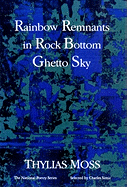 And although the sandwich also reminded me of my fourth book in which I wrote that oil in the puddle was still ghetto stained glass, still rainbow remnants in rock bottom ghetto sky, I wondered what the oil, in small enough quantity to be pretty without also being disastrous, looked like from underneath, looking up at it from in the water, as fish might, as aquatic mammals while submerged might, as sea turtles might; I wondered about the tips of aquatic plants dipping into the oil as into paint.
 I wondered about opportunistic qualities (configurations of collaborative potentials) of poetry, wondered about, questioned, and needed them, nourishing myself with such wonderings, the glamorized puddle presenting as a portal to a metaphor-induced transformation of surface, an overlay that fit well —sandwich garnish— next to a down-home serving of unsettling occurrence arriving too soon for those of a certain kind of conscience to transform into the range of possibilities waiting to be enacted from under water in the gulf, in Louisiana looking up at an oil-painted ceiling riding the water, a tainted chapel, spoiled colors of glory. (image credit: Matthews/AP, as found at the New York Daily News site.)
Perhaps I would not find beauty so necessary to growth and repair were it permanent, were it possible to make something that can endure all possibility of event, specifically a beauty in how things connect on so many scales, the choreography of connection, the energy, intensity, so that sometimes it's brutal, but I wouldn't want beauty to have to be only weak. I expect things to unfold in all the ways possible for unfolding. I accept the range. The spread. I adore it. The Limited Fork keeps bifurcating and bifurcating, sending out tines and sub-tines to attempt to locate and connect with the elements of spread, the inhabitants of range.
The specialness and preciousness of that which, in a particular form, will be lost is an outcome of interactions with apparent inevitability of demise of a particular iteration attached to a particular moment in the timeline and timescale of an entity's existence. That form, this form, that other form can be appealing to me; that form, this form, and that other form seduce me into wanting to engage with those forms, my engagement itself a configurable outcome of an interaction. A collaborative event. And it may be mutual. I too am a collaboration of many forms functioning as a community, an environment of identity.
 Mutual seduction of form by form. The sensual appeal need not be definable as a certain category of beauty; line and shape are suggestive, recur on various scales, offer locations of possible temporary connection, suggest parts that when combined can be experienced as whole subsystems of something even larger. Shape and angle offer potential, each a solution of an equation, points of entry into an interaction and points of departure from an interaction in which there's been a priming (courtesy the marking that occurs on some scale for varying duration, perhaps, in the romantic version that may or may not happen on some scale somewhere, including dream and imagination, infinitely dissipating) for participation in (collaboration with) transactions with other entities.
(Hiroshi Sugimoto's mathematical form as seen in the New York Times portfolio slideshow.)
A general lack of completion (one way to configure the acceleration of the universe, the continuing dispersal of cosmic information) invites an understanding (wish) of the journey as a seeking of connection, perhaps even a seeking of a reunification that could be an evolved form of an initial condition of unification (just before whatever banged, banged and/or just before the moment of creation, for instance) that Limited Fork Theory prefers to posit as an initial condition of incredible intimacy (profound density, profound gravity holding what will be components [when it bangs/blossoms] into what could appear to be a single entity under intense pressure) that for some reason (invitation to the speculative) banged or blossomed in the violent manner (until engaged with on a timescale revealing even a crude form of gracefulness associated with that scale) of a puffball that in some understandings becomes graceful in the violent release of spores, a beautiful violence of trying to persist, violent joy of possibly successfully fighting extinction.
Though the source puffball explosion footage from High287 on youtube was not captured with a high-speed camera, I have nevertheless slowed down the footage, first to 5fps, then that video outcome, shown below, was slowed down to 10fps, resulting in a 2:35 version of a 31-second video capture that more properly should be called a 2:35 version of a 21-second video capture as the slowed down version begins 10 seconds into the 31-second source video.
FreeVideoCoding.com
 In this approach, acceleration does not have to be understood as speed, but may be configured as a lengthening, an elongation of distance between cosmic components, moving apart unto the limits of space in which to move apart, space created by the moving apart, space in which to move necessarily a part of the event of moving. Assuming a limit of generation of space to accommodate movement, then what? —a caving into generated space, components attempting reconnections? comets apparently particularly aggressive in their periodic attempts? icy cosmic suicides? One of them will do as my unorthodox version of an already unorthodox (not exactly in the new testament in this capacity) Gabriel, meteor showers subbing as visual iterations of his horn of judgment. (Perseida lesen Iimage by BZd, Pilis mountain, Hungary. Time lapse movie of 4.5 hours of meteor hunting., a collaborative configuration of an outcome of an interaction system that includes: BZd, time, Perseid meteors, a camera, opportunity, the Pilis mountain, and now, in some small reconfiguration: this post.)
Why necessarily bother to engage now with that which will not, that which cannot change? An inflexibility more pitiable than admirable in interaction. This would exclude faith which can waver though my mother, for one would probably deny this. Perhaps more thorough investigation, at scales not currently accessible, might reveal tiny bits of flexibility, maybe a form of evolutionary memory of having been more flexible. Forms of diminished urgency [energy] can be outcomes of interactions with the permanently unchanged and permanently unchanging (I do not know what that is, by the way), including unending stability as form of diminished urgency, even though stability may be quite appealing to the precarious, for instance, and to those entities and circumstances in which flux and uncertainty function more prominently as burdens, challenges, and hazards, or just as milder forms of annoyance.
 For me, engagement tends to net a wow of the moment of interception of something with any of my senses, a wow that fades, as probably nothing can be, so far, sustained indefinitely in any particular iteration even as it powers, more successfully when the wow is most intense, an engine within me that hungers to connect with evidence of thriving creative humanity, a creativity that makes something to feed the senses (and by extension what the senses feed), something that gets tangled easily with worth and purpose of senses, configured here as genetic and environmental technology that allows us to connect with what is outside of us, making what is connected with, part of us. The above image presents some of the geometries assembled in Hamtramck (near Detroit, part of extended Detroit, Detroit as an interacting system) as Ukranian Disneyland; it is an ideal illustration of a key principle of Limited Fork Theory: the collaborative nature of all things, or, stated differently, reconfigured, that is to say, a notion that interaction is responsible for most (pretty close to all, I'll dare say, though I know the fallibility of a forking system that has holes between tines) iterations of that which exists.
The caption accompanying the set of Dmytro Szylak's Ukranian Disneyland images at Swipple says that: Mr. Szylak was born in 1920, in the village of Lwiw, Ukraine, and came to the U.S. in 1949. He began building this work around 1990, after retiring from the General Motors Hydromatic Factory, where he worked on the assembly line for 32 years; 32 years working on a communication system between engine and wheels, a system of collaboration to enable a vehicle to enable a journey, a configuration of a collaboration with space, time.

(map from wikimapia.)
Without knowing other information that, when interacting with what is being said here will necessarily reconfigure (somewhere in a range from the subtle to the profund) what's being said here, I will venture to say that 32 years of assembling transmissions primes a person to continue to put things together. A history of assembling probably without flexibility of component manipulation and/or of configuration creativity could interact with a longing to depart from parameters of GM assemblage (a departure that did occur via interaction with a devastating fire in 1953 in the Livonia, MI plant).
Four of my maternal uncles worked on automotive assembly lines in Ohio, and not once have they mentioned downtime in the factory where workers could take discarded parts to play with, making other structures of aesthetic and/or practical purpose, outcomes displayed privately in a plant show and/or also publicly. Perhaps Dmytro Szylak was aware of such possibilities without being able to act upon them other than in his mind as a factory of idea and imagination. Perhaps there were dreams of alternative building with materials he worked with for 32 years. Dreams perhaps involving repurposing of what was local, what he could get his hands on, producing intimate reconfigurations.
There's something rewarding about assembling, about building rather than demolishing, taking the outcomes of demolition to rebuild in other realizations of form; there's so much limited forkiness in his understanding of the cooperation of parts, their essential role in a larger enterprise of structure, maintaining that enterprise while retaining some integrity of part, transitioning at the boundaries, the locations of inter-part connection, from self to community, the hybrid form taking root in those connections between parts. Dmytro Szylak assembles a community structure from parts found in the community, discarded parts, parts available for repurposing, for transformation.
I like how the Ukranian Disneyland structure isn't solid; the eye can follow the lines and angles, can use openings to temporarily partition the sky, can corral constellations, can enjoy the patterns of connection, can fall in love with locations of union, can understand how Dmytro Szylak finds a place for newcomers. His structure system is not limited to growth in a single direction or on a single plane; there are many options for where and how a newcomer can join. In this way, there is no predetermined structural destination with which parts must conform (form of interaction/collaboration); structural growth patterns are shaped by contributions from the nature of the part joining the community structure. This open construction allows components (residents of the structure) to seem to play in their own playground. It is easy to begin rearranging the parts visually as the eyes play with the assemblage. Ukranian Disneyland is rescued from an inevitability of form, while being totally consumed with an inevitability of making and assembling.
The shuffling of information in any of its solid, fluid, virtual, digital, etc. forms is expected to occur in the practice of Limited Fork Theory. Many, many investigations of interactions, without theory-mandated boundaries; braking established instead by an investigator's interaction with integrity, scruples, ethics, and so forth, as defined by that investigator. Because interaction is a form of collaboration, participants in the interaction are at risk of influence, at risk of being marked by the interaction, changed in some way, from mild, barely perceptible, apparently no change to gross change, nearly complete transformation or domination. Interaction works best when participants enter the transaction with some opening at at least some of the contact points. Interaction works best when participants enter it with a willingness to be changed. It is to appreciate the threats and possibilities of many forms of journey. After exposure (form of interaction) to configurations of information, it may not be possible to maintain beliefs exactly as they were before exposure.
This approach and its consequences (the system of this approach) is difficult for my mother, difficulties to be explored in a variety of visual configurations, two in progress now, one of which, in an early emerging time-based form, you may watch:
FreeVideoCoding.com
Digital handling and manipulation of information is becoming increasingly easy to accomplish by those without sophisticated and specialized training via applications with user interfaces becoming smarter all the time, leaving the user having to make mostly creative decisions, bypassing complexity of use that would limit access to comfort with using the applications to produce some object of some form of information. As easy as word processing! —And becoming easier! Entry-level applications provide features that promise pro-sumer outcomes, outcomes of sufficient polish that aesthetic merit can be successfully defended. Indeed, Tarnation, made on a Mac with iMovie, the basic movie-editing application native on all Apple computers (with versions available now for both some generations of iPhone and iPad), won Best Documentary from the National Society of Film Critics, the Independent Spirits, the Gotham Awards, and the LA and London International Film Festivals. Here's the Tarnation trailer:
Part of a reason to use more digital approaches in producing academic objects of information involves answering questions about the purpose of an academic object of information. As most academic objects of information are text-based, some of the questions involve forms that text can take (however brief the taking), locations that can host text, and how text can be shared with a wide range of humanity, including some constituents with varying sensory function. Each form has its own rules governed by the existing boundaries of possibility within that form, boundaries that can change as what's possible changes in some other moment, or some other aspect of a moment. The information in an academic object of information can expect to adapt (as the form can also expect) in a collaboration with form, the collaboration (or interaction) temporarily (for the duration of the interaction) adjusting what is possible for the hybrid form, drawing on the parameters of possibility that each participant brings to the interaction.
—This is a primary location of excitement for me in the study of interacting systems, watching, causing, participating in hybrid forms that emerge in collaboration or interaction, some forms of which are forms of collision, forms of obliteration, but also forms of beauty that seem to exert no harm on scales to which I have access at the time of consideration.
—even though technology was/is already part of the humanities, already both an outcome of human cultural practices and a vehicle through which human cultural practice occurs. Technology, in fact, is a primary enabler of social and cultural interaction; technology offers tool systems for expressing cultural practice.
Since I first wrote a story when I was six, I used technology, the technology of loose leaf paper manufactured with the blue lines that I thought of as over-disciplined veins, the kind possible in households more common than my own where I was surprised sometimes that my own veins weren't curlicues; I used the technology of a #2 graphite-cored pencil (a Laddie pencil), and, as another example: the technology of my mind within the parameters of its flexible configuration to which both genetic and environmental (which includes social and cultural elements) factors contribute. I used a manual typewriter by fifth grade, first a Royal, much like the one pictured here (courtesy strikethru.net), and then an electric Smith Corona.
Some of the nature of mergers I continue to explore involve ways of reconfiguring information in order to extend its accessibility and in order to expose more possible configurations of systems of being and systems of meaning, simultaneously extending possible access to those systems, assuming some existing or some acquired means to connect to or otherwise retrieve web-based information, which at the moment is the best location to share that which is an outcome of collaboration that is necessarily an outcome of (form of) interaction.
Perhaps this is also a cautionary approach to try not to prematurely assume accuracy of opinion, or correctness of conclusion; a cautionary approach not to prematurely assume that a configuration of information has revealed permanent knowledge, or anything more than a temporary fact that is only a consequence of everything collaborating (interacting) in order to produce the outcome configuration of that moment of interaction.
Perhaps this approach is indicative of a kind of intellectual gluttony and a desire for kaleidoscopic seduction in my wanting to configure from as many angles as I can imagine on as many scales as I can imagine
—I love the geometries of outcomes, the temporary clusters of geometries that emerge as outcomes are configured and reconfigured into possible systems of (fleeting) meanings. These meanings are like promises from something well-intentioned, sincere at the time of promising, yet eventually unable to keep those promises, but I've enjoyed the commitment to attempt. The meanings and promises are also assemblages and systems. (image of Ukranian Disneyland by Dmytro Szylak as seen at Swipple)The myriad beautiful assemblages of various forms of dimensionality (perhaps becoming increasingly unsteady temporarily and/or [on various scales] becoming increasingly steady temporarily as they are assembled/reassembled); the myriad beautiful assemblages are (usually) temporary structures that are outcomes of arranging and shuffling clusters of geometries into super-clusters,
perhaps arriving at configurable forms of umbrellas that can temporarily function as large-scale or microscopically revealed universes, as in, for example, this image, called: "Cellular cosmos: A microscopic universe" from chronoscapes and aquascapes of bubble films, that, as thin as they may seem, have multiple surfaces; each bubble film has multiple surfaces. Consider for a moment the sandwiching of surfaces that occurs in the interaction system of oil in a puddle of water. I photographed this puddle sandwich near where Miner bifurcates from Miller Road, a location near my favorite branch that was forfeited a few years ago for an inappropriate curl (like a rib) of the branch around wires of an electrical power system. The bottom surface of the puddle is in contact with the top irregular asphalt surface of Miner Street, so the bottom surface of the puddle is also irregular, matching irregularities with the asphalt. The top surface of the puddle is in direct contact with the bottom surface of the motor oil. The top surface of oil is in direct contact with air and light, some of which is reflection of part of a branching system of a tree. It is possible to mix these interacting layers so that the surfaces are disturbed. A rumpling of this sandwich of surfaces can occur; a temporary mingling can happen, say, as these surfaces are stirred into each other for a more complex relationship of interaction, the pattern of oil obviously dynamic, obviously shifting during the aesthetic and intimate trauma of the stir. With a stick (a single-tined fork) I stirred, but did not film, a temporary little vortex into what may have behaved as a center of the oil (I treated it as such).
And although the sandwich also reminded me of my fourth book in which I wrote that oil in the puddle was still ghetto stained glass, still rainbow remnants in rock bottom ghetto sky, I wondered what the oil, in small enough quantity to be pretty without also being disastrous, looked like from underneath, looking up at it from in the water, as fish might, as aquatic mammals while submerged might, as sea turtles might; I wondered about the tips of aquatic plants dipping into the oil as into paint. I wondered about opportunistic qualities (configurations of collaborative potentials) of poetry, wondered about, questioned, and needed them, nourishing myself with such wonderings, the glamorized puddle presenting as a portal to a metaphor-induced transformation of surface, an overlay that fit well —sandwich garnish— next to a down-home serving of unsettling occurrence arriving too soon for those of a certain kind of conscience to transform into the range of possibilities waiting to be enacted from under water in the gulf, in Louisiana looking up at an oil-painted ceiling riding the water, a tainted chapel, spoiled colors of glory. (image credit: Matthews/AP, as found at the New York Daily News site.)Perhaps I would not find beauty so necessary to growth and repair were it permanent, were it possible to make something that can endure all possibility of event, specifically a beauty in how things connect on so many scales, the choreography of connection, the energy, intensity, so that sometimes it's brutal, but I wouldn't want beauty to have to be only weak. I expect things to unfold in all the ways possible for unfolding. I accept the range. The spread. I adore it. The Limited Fork keeps bifurcating and bifurcating, sending out tines and sub-tines to attempt to locate and connect with the elements of spread, the inhabitants of range.
The specialness and preciousness of that which, in a particular form, will be lost is an outcome of interactions with apparent inevitability of demise of a particular iteration attached to a particular moment in the timeline and timescale of an entity's existence. That form, this form, that other form can be appealing to me; that form, this form, and that other form seduce me into wanting to engage with those forms, my engagement itself a configurable outcome of an interaction. A collaborative event. And it may be mutual. I too am a collaboration of many forms functioning as a community, an environment of identity.
Mutual seduction of form by form. The sensual appeal need not be definable as a certain category of beauty; line and shape are suggestive, recur on various scales, offer locations of possible temporary connection, suggest parts that when combined can be experienced as whole subsystems of something even larger. Shape and angle offer potential, each a solution of an equation, points of entry into an interaction and points of departure from an interaction in which there's been a priming (courtesy the marking that occurs on some scale for varying duration, perhaps, in the romantic version that may or may not happen on some scale somewhere, including dream and imagination, infinitely dissipating) for participation in (collaboration with) transactions with other entities. (Hiroshi Sugimoto's mathematical form as seen in the New York Times portfolio slideshow.)
A general lack of completion (one way to configure the acceleration of the universe, the continuing dispersal of cosmic information) invites an understanding (wish) of the journey as a seeking of connection, perhaps even a seeking of a reunification that could be an evolved form of an initial condition of unification (just before whatever banged, banged and/or just before the moment of creation, for instance) that Limited Fork Theory prefers to posit as an initial condition of incredible intimacy (profound density, profound gravity holding what will be components [when it bangs/blossoms] into what could appear to be a single entity under intense pressure) that for some reason (invitation to the speculative) banged or blossomed in the violent manner (until engaged with on a timescale revealing even a crude form of gracefulness associated with that scale) of a puffball that in some understandings becomes graceful in the violent release of spores, a beautiful violence of trying to persist, violent joy of possibly successfully fighting extinction.
Though the source puffball explosion footage from High287 on youtube was not captured with a high-speed camera, I have nevertheless slowed down the footage, first to 5fps, then that video outcome, shown below, was slowed down to 10fps, resulting in a 2:35 version of a 31-second video capture that more properly should be called a 2:35 version of a 21-second video capture as the slowed down version begins 10 seconds into the 31-second source video.
FreeVideoCoding.com
In this approach, acceleration does not have to be understood as speed, but may be configured as a lengthening, an elongation of distance between cosmic components, moving apart unto the limits of space in which to move apart, space created by the moving apart, space in which to move necessarily a part of the event of moving. Assuming a limit of generation of space to accommodate movement, then what? —a caving into generated space, components attempting reconnections? comets apparently particularly aggressive in their periodic attempts? icy cosmic suicides? One of them will do as my unorthodox version of an already unorthodox (not exactly in the new testament in this capacity) Gabriel, meteor showers subbing as visual iterations of his horn of judgment. (Perseida lesen Iimage by BZd, Pilis mountain, Hungary. Time lapse movie of 4.5 hours of meteor hunting., a collaborative configuration of an outcome of an interaction system that includes: BZd, time, Perseid meteors, a camera, opportunity, the Pilis mountain, and now, in some small reconfiguration: this post.)Why necessarily bother to engage now with that which will not, that which cannot change? An inflexibility more pitiable than admirable in interaction. This would exclude faith which can waver though my mother, for one would probably deny this. Perhaps more thorough investigation, at scales not currently accessible, might reveal tiny bits of flexibility, maybe a form of evolutionary memory of having been more flexible. Forms of diminished urgency [energy] can be outcomes of interactions with the permanently unchanged and permanently unchanging (I do not know what that is, by the way), including unending stability as form of diminished urgency, even though stability may be quite appealing to the precarious, for instance, and to those entities and circumstances in which flux and uncertainty function more prominently as burdens, challenges, and hazards, or just as milder forms of annoyance.
For me, engagement tends to net a wow of the moment of interception of something with any of my senses, a wow that fades, as probably nothing can be, so far, sustained indefinitely in any particular iteration even as it powers, more successfully when the wow is most intense, an engine within me that hungers to connect with evidence of thriving creative humanity, a creativity that makes something to feed the senses (and by extension what the senses feed), something that gets tangled easily with worth and purpose of senses, configured here as genetic and environmental technology that allows us to connect with what is outside of us, making what is connected with, part of us. The above image presents some of the geometries assembled in Hamtramck (near Detroit, part of extended Detroit, Detroit as an interacting system) as Ukranian Disneyland; it is an ideal illustration of a key principle of Limited Fork Theory: the collaborative nature of all things, or, stated differently, reconfigured, that is to say, a notion that interaction is responsible for most (pretty close to all, I'll dare say, though I know the fallibility of a forking system that has holes between tines) iterations of that which exists.The caption accompanying the set of Dmytro Szylak's Ukranian Disneyland images at Swipple says that: Mr. Szylak was born in 1920, in the village of Lwiw, Ukraine, and came to the U.S. in 1949. He began building this work around 1990, after retiring from the General Motors Hydromatic Factory, where he worked on the assembly line for 32 years; 32 years working on a communication system between engine and wheels, a system of collaboration to enable a vehicle to enable a journey, a configuration of a collaboration with space, time.
(map from wikimapia.)
Without knowing other information that, when interacting with what is being said here will necessarily reconfigure (somewhere in a range from the subtle to the profund) what's being said here, I will venture to say that 32 years of assembling transmissions primes a person to continue to put things together. A history of assembling probably without flexibility of component manipulation and/or of configuration creativity could interact with a longing to depart from parameters of GM assemblage (a departure that did occur via interaction with a devastating fire in 1953 in the Livonia, MI plant).
Four of my maternal uncles worked on automotive assembly lines in Ohio, and not once have they mentioned downtime in the factory where workers could take discarded parts to play with, making other structures of aesthetic and/or practical purpose, outcomes displayed privately in a plant show and/or also publicly. Perhaps Dmytro Szylak was aware of such possibilities without being able to act upon them other than in his mind as a factory of idea and imagination. Perhaps there were dreams of alternative building with materials he worked with for 32 years. Dreams perhaps involving repurposing of what was local, what he could get his hands on, producing intimate reconfigurations.
There's something rewarding about assembling, about building rather than demolishing, taking the outcomes of demolition to rebuild in other realizations of form; there's so much limited forkiness in his understanding of the cooperation of parts, their essential role in a larger enterprise of structure, maintaining that enterprise while retaining some integrity of part, transitioning at the boundaries, the locations of inter-part connection, from self to community, the hybrid form taking root in those connections between parts. Dmytro Szylak assembles a community structure from parts found in the community, discarded parts, parts available for repurposing, for transformation.
I like how the Ukranian Disneyland structure isn't solid; the eye can follow the lines and angles, can use openings to temporarily partition the sky, can corral constellations, can enjoy the patterns of connection, can fall in love with locations of union, can understand how Dmytro Szylak finds a place for newcomers. His structure system is not limited to growth in a single direction or on a single plane; there are many options for where and how a newcomer can join. In this way, there is no predetermined structural destination with which parts must conform (form of interaction/collaboration); structural growth patterns are shaped by contributions from the nature of the part joining the community structure. This open construction allows components (residents of the structure) to seem to play in their own playground. It is easy to begin rearranging the parts visually as the eyes play with the assemblage. Ukranian Disneyland is rescued from an inevitability of form, while being totally consumed with an inevitability of making and assembling.
The shuffling of information in any of its solid, fluid, virtual, digital, etc. forms is expected to occur in the practice of Limited Fork Theory. Many, many investigations of interactions, without theory-mandated boundaries; braking established instead by an investigator's interaction with integrity, scruples, ethics, and so forth, as defined by that investigator. Because interaction is a form of collaboration, participants in the interaction are at risk of influence, at risk of being marked by the interaction, changed in some way, from mild, barely perceptible, apparently no change to gross change, nearly complete transformation or domination. Interaction works best when participants enter the transaction with some opening at at least some of the contact points. Interaction works best when participants enter it with a willingness to be changed. It is to appreciate the threats and possibilities of many forms of journey. After exposure (form of interaction) to configurations of information, it may not be possible to maintain beliefs exactly as they were before exposure.
This approach and its consequences (the system of this approach) is difficult for my mother, difficulties to be explored in a variety of visual configurations, two in progress now, one of which, in an early emerging time-based form, you may watch:
FreeVideoCoding.com
Digital handling and manipulation of information is becoming increasingly easy to accomplish by those without sophisticated and specialized training via applications with user interfaces becoming smarter all the time, leaving the user having to make mostly creative decisions, bypassing complexity of use that would limit access to comfort with using the applications to produce some object of some form of information. As easy as word processing! —And becoming easier! Entry-level applications provide features that promise pro-sumer outcomes, outcomes of sufficient polish that aesthetic merit can be successfully defended. Indeed, Tarnation, made on a Mac with iMovie, the basic movie-editing application native on all Apple computers (with versions available now for both some generations of iPhone and iPad), won Best Documentary from the National Society of Film Critics, the Independent Spirits, the Gotham Awards, and the LA and London International Film Festivals. Here's the Tarnation trailer:
Part of a reason to use more digital approaches in producing academic objects of information involves answering questions about the purpose of an academic object of information. As most academic objects of information are text-based, some of the questions involve forms that text can take (however brief the taking), locations that can host text, and how text can be shared with a wide range of humanity, including some constituents with varying sensory function. Each form has its own rules governed by the existing boundaries of possibility within that form, boundaries that can change as what's possible changes in some other moment, or some other aspect of a moment. The information in an academic object of information can expect to adapt (as the form can also expect) in a collaboration with form, the collaboration (or interaction) temporarily (for the duration of the interaction) adjusting what is possible for the hybrid form, drawing on the parameters of possibility that each participant brings to the interaction.
—This is a primary location of excitement for me in the study of interacting systems, watching, causing, participating in hybrid forms that emerge in collaboration or interaction, some forms of which are forms of collision, forms of obliteration, but also forms of beauty that seem to exert no harm on scales to which I have access at the time of consideration.
Tuesday, January 18, 2011
Some Thoughts (not entirely mine, product of a number of partnerships) on: A Collaborative Nature & Notions of Ownership
is among our collaborators.
Even nature of which we are part
is among our collaborators.
So far, I've produced nothing in isolation. Not even a thought
when that thought has been about something, that subject (and all systems responsible for that subject existing so that it was available for me to think about it) collaborating in a thought system I call mine for the convenience, my mind an obvious host of the guest subject, but as a good host, I have certain obligations to my guest, among them, gratitude to the guest for bringing, for arriving as a subject for my thought system. I don't own the thought; it is not mine exclusively.
 My relationship with information (and on some level, most things may be configured or expressed as information) is not owner of information. I assemble information, shuffle it, collect it temporarily, transform it as I am being transformed by it. It is through connecting and assembling information, through transformative processes that idea systems may be configured and understood as remixes. A more complex relationship with information configuration can lead to more complex policy regarding collaborators which include the environment, nature, (all of) space —none of which I own. And what many consider ownership is not permanent (ultimately, there's some form of ownership of chauvinistic illusion; a bit of palliative function since perhaps humans can't be cured of what may be configured as human nature systems); if anything, that ownership system is owned by time more so than anyone claiming ownership, though time is complex and not a single thing; as a system experiences co-ownership, or co-hosting of what it interacts with; belonging to time meaning having been hosted by a time system, having occurred. (Start Talking handbook from University of Alaska Anchorage)
 You Don't Own Me comes to mind (interacts with/collaborates with a thought system in progress) as performed in The First Wives Club by Bette Midler, Goldie Hawn, and Diane Keaton; the you of the title and lyrics right now configured as idea itself, a migratory, a generic proxy for anything with which I collaborate, with which I interact without owning it; I like sharing the products I configure with contributors and collaborators who become collaborators by accepting an invitation to experience the poam (product of acts of making, acts that are systems of activity among collaborators), experience necessarily collaborative. (First Wives Club image from wikipedia):
Perhaps if I produced something while in complete isolation from any interaction or any other configuration of opportunity for influence, that something produced might be mine in a way that so far nothing else seems to be, my physiology itself proceeding as a collaboration of genetic contributions from two complex sources, two genetic systems. This is, however, a scenario I will not pursue, having no interest in establishing a pure ownership, a free and clear claim to being sole source of something. I mean, it is as if I stumbled upon a fork, as if, while falling, I reached out and was rescued by a tine that happened to be there, that was activated by my falling through it/as I fell through it —maybe.
It's all speculative. I find an absence of certainty refreshing, in many ways, for in that absence is something else, systems of transience, ebbing and flowing, waxing and waning, the exuberance of the hive, stunning, sometimes dizzying, sometimes subtle movement, so subtle that on some scales the movement bears well a label of motionless, but that range of movement suggest to me, that range collaborates with me into an idea that most things dance, somewhere in their atomic structure, most things dance —some of the dance hoped into fulfillment:
Tuesday, January 11, 2011
Some Limited Fork History that is also Some current Limited Fork Theory
to a place where our ideas (already forked) converge, mingle, diverge, etc. (politely); that is: they interact in any way possible for them to interact (polite forms of the ways possible, please) while configuring and reconfiguring tines of a Limited Fork system
 You'll be exposed to much of the history of Limited Fork Theory in Design Lab 1, but not all of it, in part because Limited Fork Theory deals with partialities of
 partialities, an inevitable handicap for an approach to making understandings and to applying understandings that relies on a flawed tool, whose flaws include being the only tool available within what would be a closed fork system if the fork did not have
 gaps between the tines it must have as a forking or bifurcating system. (image of tree of chaos and bifurcation theory by System.dat-User.dat at flickr, bifurcating lung system from zhezhang/project)
I also do not yet (and do not to ever) know the entirety of the history of Limited Fork Theory. I can share with you a moment in which I both became one of the tines, and became aware of he presence of a limited fork (something already in place, joined in progress) —please note that in my sharing a moment from a prior event system, a part of the past (that which adheres on some scale to any part of a tine forking up the past to reconstruct it for you here and now); a part of the past becomes (is forked into) part of the moment occurring, the moment occurring seamlessly that we fork into parts: minutes, years, etc. (incredible flexibility when you think about it).
The sharing of a moment in October 2004 when I became aware of a system of thinking and making already in progress via the video poam (product of act[s] of making made that weekend, on Saturday night after coming home from a movie at the Quality 16 Cinema on Jackson Road in Ann Arbor, the video poam shared with my classes and colleagues on the last Monday in October, transforming everything in the configuration of everything the fork provided/provides:
The Song of Iota
FreeVideoCoding.com
The Song of Iota contains the Saturday night system of understanding that arrived at that moment of awareness in the Quality 16 Cinema on Jackson Road (see map below); I opened iMovie for the first time when I got home and with that application made the Song of Iota.
View Larger Map
In 2005, I made DOD: the death of depth (you'll notice that the video starts with the death of death —oops! such configuration of intention is a possible outcome of interaction), a video book about the birth of Limited Fork Poetics, an ancestor system of Limited Fork Theory:
FreeVideoCoding.com
Tuesday, January 26, 2010
support SITA SINGS THE BLUES! (and Creative Commons and join Limited Fork Theory in celebrating the Collaborative Nature of all things)
 (poster from culturazzi.org)
Nina Paley generously gives her beautiful film Sita Sings the Blues to us, all of us, noting that as part of culture (made of components of culture, which includes dreams), it belongs to us already, is an assemblage, an extension of parts of human experience and human interactions with all things human and all things not human. Idea itself is in part response to that which spawns it; some existing information in some form is at part of idea's heart (as it is in this clever heart umbrella from my design pick.com):

How wonderful it is for the human community to link in inspiration and response; negatively or positively we connect, configure, and reconfigure, making a map of human experience that exposes what is marvelous about us and what is not (at times, according to principles of some temporary configurations, interchangeable).
No matter how brief the configuration in which connections succeeds, I am grateful that it occurs, and I accept that for the possibility of sublime connection the possibility of brutal connections must be risked. Indeed; perception itself is configurable, winners and losers in the same situation. If there is connection, then all possible forms of connections will manifest on some scale in some location for some duration of time. Forms that are not possible will not manifest. Once a form manifests, that form is possible. Forms not possible in this configuration of now many become possible in the now of other circumstances. And what is not possible in a now of other circumstances will not manifest.
The seeking of interaction, a form of connection, that must occur in Limited Fork Theory, the study of interacting systems on any scale in any location for any duration of time; and the participation in interactions found are the context and focus of my ambition. Perhaps study and participation in some as yet undetermined number (so much falls between the tines of the limited fork, so I cannot be sure of anything, even that there is slippage —an incredible probability of slippage, but I have no proof of exactly what flips between the tines, for to know what slips is to have information that slippage denies; to know what falls through tines would be a form of catching what slips. I assume slippage, but what might disprove slippage I believe has slipped through the tines that themselves sponsor my adherence to slippage probability). Therefore: share, share, share!
This post (and forkergirl's other posts in this blog) joins Nina Paley in being made available for re/continued use with a creative commons share alike license:

This work is licensed under a Creative Commons Attribution 3.0 Unported License.
As most of us (to whom Sita Sings the Blues belongs) still exist in circumstances that require us to have a source or sources of income, Nina Paley is not prospering from free distribution of her wonderful film, so please consider supporting the ethics of sharing and collaborative building (the collaborative is a prevailing nature of things, it would seem, according to Limited Fork Theory, among other tools of perception/understanding) by making a donation at the Sita Sings the Blues site and/or by purchasing some of the products at Question Copyright.com Perhaps a Copyleft Tee shirt
Nothing but praises for Sita Sings the Blues and Nina Paley!
No better example of Limited Fork Theory in action!
Subscribe to:
Posts (Atom)