
Limited Fork graphic

Showing posts with label collective power. Show all posts

Wednesday, February 6, 2013

Picking Away At Colossal Goals

After reading the ancient texts of Roman Kings and Empires, such as Caesar’s de Bello Gallico and the Res Gestae of Augustus, a common theme seems to have risen. Both of these leaders, pivotal individuals in the construction and flourishing of the Roman Empire, relied heavily on the support of their peoples. They conquered many lands and built a vast civilization over the long years of their lives. While these individuals were at the pinnacle of this movement, they were but orchestrating the continued construction of something far greater than themselves. They were contributing, bit-by-bit, to the construction of a multi-generational project–the civilization of a nation.
These accomplishments are a reflection of the honorable fasces–a symbol of strength through unity among the Roman people. These consisted of an axe encircled in birch rods bound by a leather cord, and were carried in procession of people of power as a representation of their leadership. The bundle of birch rods is a metaphor passed down through the generations to represent the strength and potential of the collective. While one birch rod can be easily snapped, as a single individual can only progress so far in his accomplishments, a bundle of these rods remains unbreakable. Caesar and Augustus would not have achieved much of anything without the strength of their people. In having a collective working toward a goal greater than any one individual, colossal potential can be reached.

The Pyramids of Giza, the Hanging Gardens of Babylon, the Lighthouse of Alexandria, and all other tremendous accomplishments of ancient peoples were accomplished through an adherence to a lofty goal and respect for a potential greater than one’s personal scope. With the current improvements in technology, accomplishing goals has become a more rapid process. Skyscrapers seem to go up overnight and cities appear within a few years, due to improved infrastructure and fast-paced lifestyles. In this increased speed of construction, people tend to lose cognizance of higher powers. Individuals tend to neglect the power of the collective (unless you consider the poorly infrastructured but highly effective hackivists, Anonymous) in regards to patience. Whatever does not incite immediate pleasure results in avoidance. As opposed to striving after ambitious goals outside the scope of quick completion, people settle for things in which they can see the end. However, true inspiration and accomplishment comes from looking past the scope of ready achievement. Be it in novel writing, empire building, or art, delayed satisfaction can yield truly breathtaking results.
One individual, Scott Weaver, has represented the strength of dedication and progress toward a lofty goal in his 100,000 toothpick kinetic sculpture of San Francisco–Rolling Through The Bay. While the project has already taken him over 35 years to construct, he is not finished. Weaver has represented, in the video above, that he is not finished. While the balls move down the tracks, he comments on how the speed is not perfect, and as one falls off the track, acknowledges that he must fix that. There is still work to be done and that work may never be finished. Just looking at the sculpture inspires a sense of wonder. A simple toothpick is so small, so mundane, but when coordinated with ten of thousands of its kind, it becomes something greater. I believe Weaver understands the idea of delayed gratification and the power of the collective. While he may have been the only individual working on building this monumental sculpture, the continued period of time he has spent in its construction is a different form of unity. It is the adherence to dedication, a trait that is not as largely expressed in modern times as it has been in the ancient world. With the advancements in technology, the application of this one trait–this prolonged perspective–would yield results unfathomable to our current minds.
Just as birch rods bound together cannot be broken, a journey of 100,000 toothpicks results in a legacy that cannot be forgotten. Toothpick-by-toothpick and person-by-person, the colossal can be possible.

Wednesday, January 30, 2013

Societal Weeds of the Seapunk Movement

For any gardener, the battle against weeds is an unending strife. One aims to cultivate beautiful flowers and shrubs in which they intend to plant. The gardener chooses the plants, their locations, their sizes, and ultimately their fate existing in the garden. In order for these hand-selected plants to prosper, the unwanted flora must be eradicated. The weeds of the garden must be pulled to ensure the fulfillment of the gardener’s vision. So much time and maintenance must go into the care of the cultivated plants, yet one struggles to kill weeds. They sprout up naturally and can thrive, despite any work of the gardener to trim them back. Weeds are always around and, from what I can project, always will be. Adamant and numerous, these unwanted plants can easily overpower cultivated material and invade and conquer an entire garden. While the gardener attempts to trim them back or douse them in chemicals to drown their lives, weeds take on an almost immortal state. Roots can crawl deep and wide, making the process of regrowth increasingly powerful. Mass quantities of weeds become overpowering to the imperialistic gardener. They persist. As illustrated by Thylias Moss in “Tarsenna’s Defiance Garden in which I Love to Spit, ” these weeds form a garden of defiance.
Are societal movements no different? Moss introduces an interesting thought about race and other targeted identity groups in society. Certain types of people are unwanted in specific regions. In some gardens, they are weeds. However, amassing larger enough numbers or being resilient enough, a weed may survive and prosper despite the overseeing power. Many great social changes came about through weed uprising. In a sense, many styles and fashions–art forms of all kinds–stemmed from a simple weed. They started out as an ‘other’–an alternative or deviant clashing of ideas–and rose to amass a following. Sometimes these movements involve a way of life or challenge a predisposed thought. With many weeds sprouting every day, it is difficult to judge which ones will persist–as is the case of any form of life, plant or otherwise. Currently, an alternative style of fashion and music has risen. Seapunk is still in the developing and young weed state, but it may (as anything) rise to a state of longevity. It is currently a sub-genre of electric music and a fashion/design trend with an emphasis on nautical themes. Using its resources as a weed, it began rising through pop culture via social media. As it is consistently being linked and shared across the Internet, it is becoming a niche style trend with a cult following.
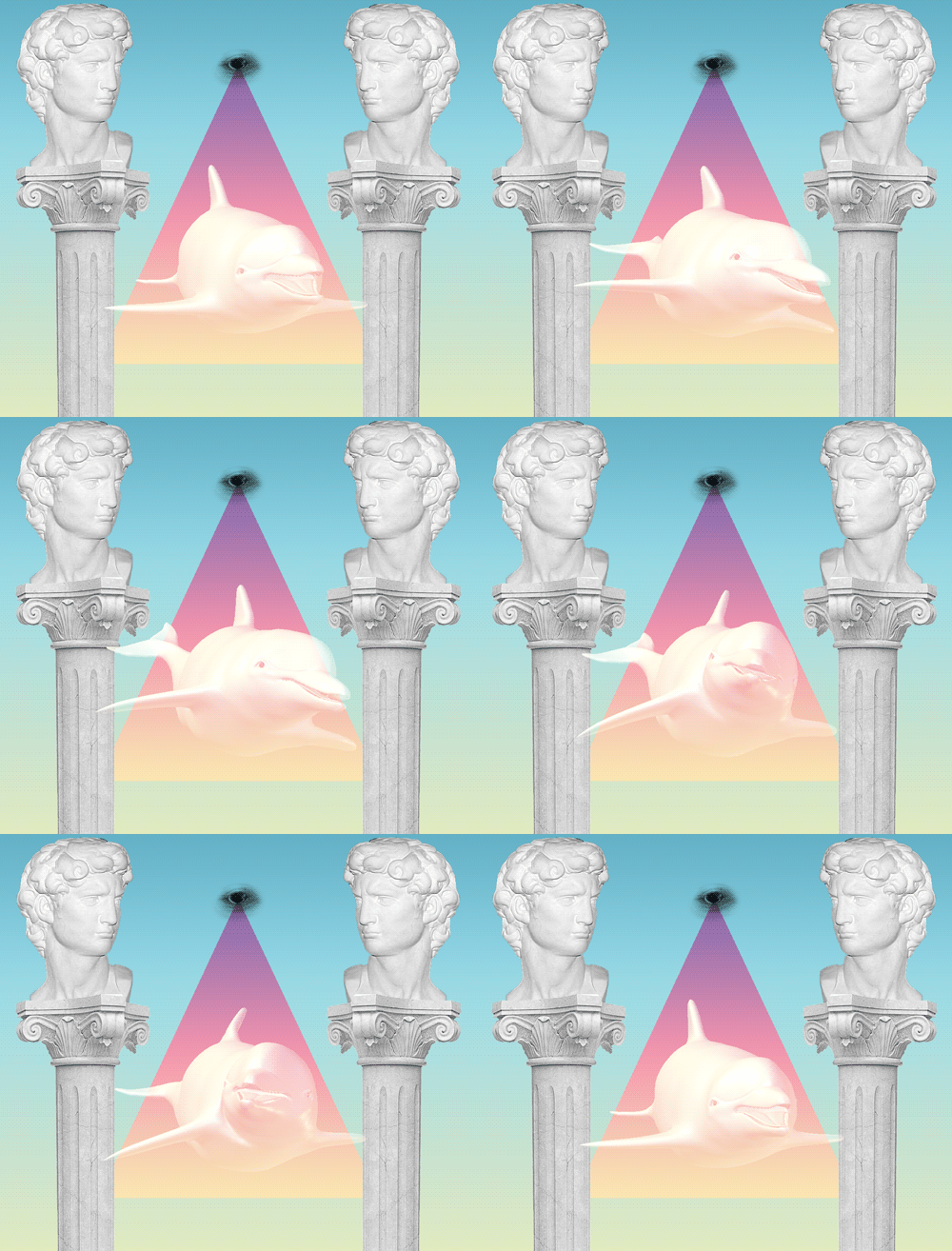
Although strange, it is an interesting case of weed-like growth. Like any fashion trend, the roots of its acceptance are unknown and likely impossible to understand. In some regards, it has been said to support environmental awareness and sustainability, with specific interest in marine life. However, despite the cause behind this trend, it is somewhat prospering. It has an active presence on Twitter (#SEAPUNK), as this social media outlet was one of its top means of growth, and a widely extensive collection of photos and sub-pages under Google’s search. The style, as far as fashion goes, involves a heavy use of sea-like colors–blue, turquoise, teal, aquamarine, etc–in contrasting and vibrant mash-ups. Clothing can involve a variety of graphic designs which incorporate dolphins, anchors, waves, and any other oceanic pictures. Some individuals dye their hair varying shades of blue and green. In addition to these themes, there is a huge reliance on mashups from varying forms of pop culture. Numerous references to the 90s are common. It is quite out of the blue, for as far as a style goes, but it is a representative rendition of how society construes fashion.
  
 In addition to the fashion, the aspects of design and music are also worthwhile to explore. While the music doesn’t particularly scream ‘nautical’ to me, as it is not a remixed rendition of SpongeBob SquarePants, I would suggest it is simply another quirk–another stem from this societal weed culture. Arguing the environment awareness cause present for the Seapunk movement, the music could potentially incorporate defense for marine environments through the lyrics. Regardless of the purpose, the pure existence of this movement is what makes it important. With such a presence of social media in the world today, any niche, any idea, can be expanded and shared with others of similar interest. The so-called ‘weeds’ of society–the outliers, the alternative idea people–can form a solid relation and maintain a presence. This is not only the case with fashion and music, but, as illustrated by Moss, a means to an uprising and prospering of targeted identities. Let the weeds grow. Support #seapunk.